
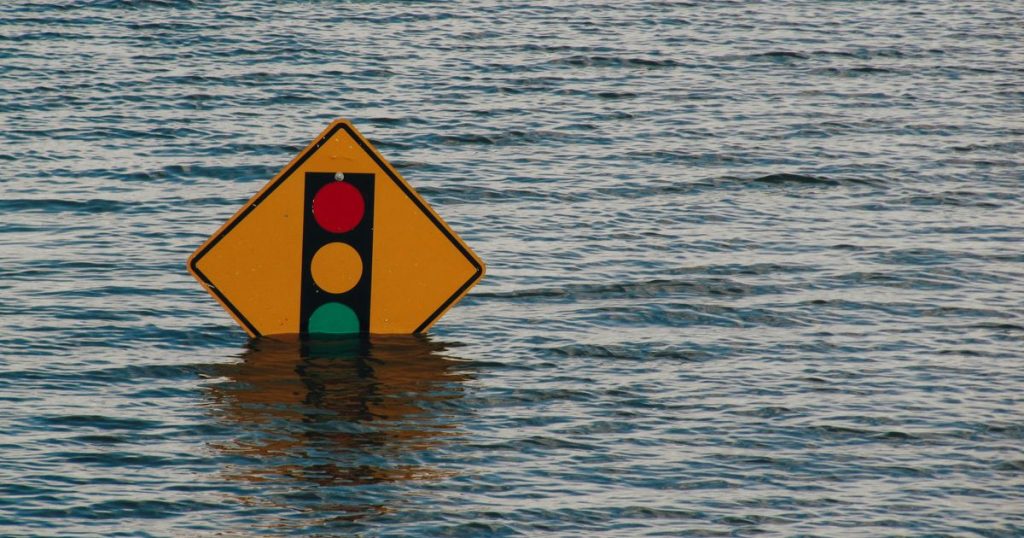
The Atlantic hurricane season runs from June 1 through Nov. 30, but heavy rains and flooding can happen any time.
It’s important to know that in North Carolina, homeowners insurance policies do not cover flood damage.
If you live in a flood plain, near a river or if you live near the coast, you should consider purchasing flood insurance for your home.
Many homeowners insurance companies also sell flood insurance.
Also, just because a home is not in a designated floodplain does not mean flood damage never happens.
Most flood insurance policies come with a 30-day waiting period, so waiting until a storm is forecast will be too late to protect your property.
Want to check your property’s flood factor? Click or tap here.
The federal government offers insurance for direct flood and flood-related damage, including mudslide and erosion under the National Flood Insurance Program (NFIP).
The federal program requires that the community in which you live adopt zoning laws that prohibit future building in flood-prone areas. The coverage involves a 30-day waiting period before the policy becomes effective; however, there are exceptions. For more info, contact NFIP at 1-800-427-4661 or on FEMA’s website.
What is a flood?
Flood insurance covers direct physical loss caused by a flood. In simple terms, FEMA defines a flood as an excess of water on land that is normally dry.
Also, the National Flood Insurance Program defines a flood as general and temporary condition of partial or complete inundation of two or more acres of normally dry land area or of two or more properties (at least one of which is your property) from:
- Overflow of inland or tidal waters
- Unusual and rapid accumulation or runoff ofsurface waters from any source
- Collapse or subsidence of land along the shore of a lake or similar body of water as a result of erosion or undermining caused by waves or currents of water exceeding anticipated cyclical levels that result in a flood as defined above.
How much does North Carolina flood insurance cost?
Annual flood insurance rates in North Carolina range from $200 to nearly $5,000, depending on where you live.
North Carolina residents who buy a policy from the NFIP will find that the cost of flood insurance depends on whether they live in a high-risk flood zone. Other factors that impact rates include the elevation a home sits on and the height of the lowest floor of the home.
Is flood insurance required in North Carolina?
North Carolina homeowners aren’t required by the state to buy flood insurance. However, your mortgage company may require it if your home is in an area with a high risk of flooding.
There are also federal requirements.
Homes that are in a Federal Emergency Management Agency (FEMA) flood zone beginning with “A” or “V” need flood insurance to get a mortgage. You can check FEMA’s Flood Insurance Rate Map (FIRM) to look up your property’s flood zone.
These homes are typically located at a low elevation above sea level, like the Outer Banks, or near a river, like the Catawba. Their proximity to water means that they have a greater chance of flooding compared to a home that is inland.
NFIP flood insurance companies in NC vs. private flood insurance
Since the NFIP is a federal program, a policy costs the same regardless of who you buy it from.
Companies that offer NFIP flood insurance include: North Carolina Farm Bureau, Selective, Assurant, The Hartford, Allstate, Wright National, USAA, Bankers Insurance, Auto-Owners and Trisura among others. Federal coverage (NFIP) is paid out by the government and financed through taxpayer money.
Private flood insurance covers the structure of your home and its contents from water damage caused by a flood. What separates this option from other flood insurance policies is that it is not backed by the federal government.
Policies under the federal program are able to pay out flood damage claims for as long as the program receives funds. A private flood insurance company, on the other hand, is a for-profit company that relies on either an insurance policy of their own or money collected from premiums to pay out damages to claimants.
Some companies offer both NFIP and private flood insurance. People looking to purchase flood insurance should compare prices and select a policy that best fits their needs.
The largest private flood insurance companies in North Carolina include AIG, AXA SA, Liberty Mutual, Zurich, Assurant, Sompo, Berkshire Hathaway, Allianz, Transverse, Swiss Re, Arch Captial, Trisura and Allstate among others.
What does an NFIP cover?
A flood insurance policy can cover both your home and its contents.
The NFIP’s building coverage includes foundations, electrical and plumbing systems, and water heaters. An NFIP contents coverage policy would cover clothing, furniture, personal electronics, and portable and window air conditioners.
For residential properties, you can secure coverage up to $250,000 for the building and $100,000 for the building contents.
For commercial properties, you can secure coverage up to $500,000 for the building and $500,000 for the building contents.
Contents and building coverage are purchased separately, and there are always separate deductibles.


Clinton Mora is a reporter for Trending Insurance News. He has previously worked for the Forbes. As a contributor to Trending Insurance News, Clinton covers emerging a wide range of property and casualty insurance related stories.