


- For the majority of Altadena residents displaced by the January 2025 Eaton Fire, recovery is just beginning.
- UCLA researchers are tracking progress, with attention to the risk that many in a historically diverse community might not make it back home.
- Community-based groups have been essential to helping traumatized homeowners and renters find their way through unfamiliar territory.
The armada of trucks carrying debris from Altadena homes destroyed by the Eaton Fire is long gone. For months, the vehicles stirred up dust and rattled the nerves of residents, filing through the neighborhood like a parade of what they had lost.
For most Americans the fire is a distant memory in a year full of worries about the economy, immigration enforcement and entanglements abroad. But the dimensions of loss and hurt are still unfolding for displaced Altadenans.
“I’ve been having dreams,” fire survivor Rose Robinson said at a press conference marking the one year-anniversary of the Eaton Fire. “I would have dreams of people on fire; I would have dreams of my family gathering and then, like a firework, poof, they’re on fire.”
Altadena had long been a quiet model of a diverse suburb. A story about the Eaton Fire in USA Today ran under the headline, “‘What America should look like.’”
More than half of the area’s households were made up of racial or ethnic minorities. Seven in 10 of the non-white families were homeowners prior to the fire. Some Altadenans were wealthy, but 1 in 6 households had incomes below twice the federal poverty line, says Gabriella Carmona, a research analyst at UCLA’s Latino Policy & Politics Institute (LPPI).
LPPI has been gathering data to form a picture of Altadena’s progress coming back from the fire, asking the question, “Who gets to come back?”
The answer to this question won’t be known for years, but the work Carmona and her colleagues have done to date suggests the demographic mix that made Altadena unique could be lost.
Scant Evidence of Progress
More than 15,000 Altadena households were impacted by the fire. Almost half of the homes within the fire perimeter were completely destroyed.
Seven in 10 Altadenans — including this writer — have been unable to return to their homes and are living in temporary housing. A similar share are still wrangling with their insurers over coverage for home replacement or remediation.
A bigger share of Black-owned homes (58 percent) were destroyed than white-owned (45 percent). This correlates with an overall higher rate of loss to the west of Lake Avenue, where Black families were most concentrated (as were rental properties).
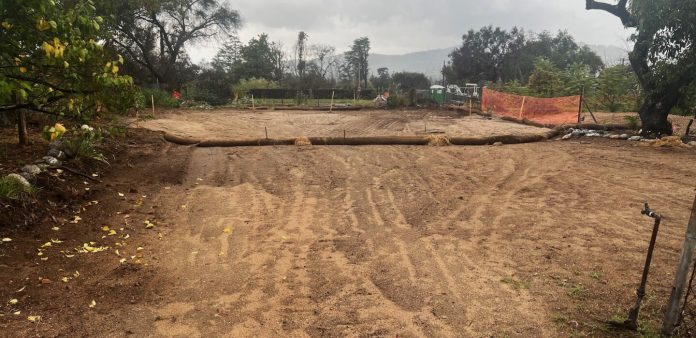
LPPI found that there has been no visible sign of progress in repairing or rebuilding 70 percent of the homes damaged or destroyed by the fire. (This encompasses both applying for a construction permit and putting a lot on the market.)
An investigation by the LA Times looked at rebuilding progress after a series of fires between 2017 and 2020 that destroyed 22,500 homes. In all, only 38 percent have been rebuilt. The rate varies greatly between the counties affected, correlated to factors including wealth and topography. Rebuilding in flat urban neighborhoods poses fewer challenges. (See chart.)
To date, the only Altadena residents who are moving forward are those with wealth and those whose insurers have paid out fully, says Joy Chen, executive director of the Eaton Fire Survivors Network. “This has been a K-shaped recovery,” Chen says. “In year two, we need to change the shape of that recovery, because that is not acceptable.”

Recovery Includes Renters
At least a quarter of Altadena’s population of more than 40,000 rented their housing. The fire destroyed 41 percent of all properties with rental units. Tenants whose homes were destroyed or damaged are in their own kind of limbo.
About 10 or 15 percent of displaced tenants have left the area, says Katie Clark, founder of the Altadena Tenants Union. Clark lost the Altadena apartment she’d lived in for 16 years in the fire.
The majority of renters who lost their homes are still looking for permanent housing, Clark says. Most have moved five or more times since the fire; few had renters insurance.
“The poorer you are, the less resources you have, the more likely you are to be moving more frequently,” she says. Post-fire demand has pushed rents up, raising the cost of moving and the risk of homelessness.
The first year of the tenant union’s work focused largely on building consensus that helping displaced tenants return is part of Altadena’s recovery, Clark says. This baseline agreement opens the door to serious discussion about affordable rental housing, she says.
Clark lived in an apartment building, but much of the rental housing in Altadena was single-family homes, back houses, accessory dwelling units (ADUs) or other structures on Altadena’s long, narrow lots. This “invisible density” could be lost.
About 90 percent of Altadena is zoned for single-family homes. There are some parcels where multifamily housing could be built and a small portion of commercial space for apartment buildings.
Clark is hopeful that options such as incentivizing rental ADUs, low-profile “bungalow courts” or affordable housing built on land owned by a nonprofit (a community land trust) could restore options for renters who want to stay in Altadena.

Accessing Resources
One of the pillars of the recovery work by Chen’s survivors network is connecting survivors to resources and to each other.
Navigating a landscape of resources and services from local and federal government programs, pivotal negotiations with insurers and potential repayment from lawsuits or utility settlements is overwhelming for most. LPPI’s surveys have confirmed the essential role that community-based organizations — and fellow Altadenans — are playing in guiding homeowners through this unfamiliar territory.
“What happens in disaster is that people lose hope very quickly and easily because they’re traumatized,” says Lori Gay, CEO of Neighborhood Housing Services of Los Angeles County. “Let’s not make it hard for a wildfire-surviving family to access resources we all pay taxes into and systems we hope will be efficient and effective.”
Gay’s nonprofit offers no-cost counseling and guidance to fire victims. She’s especially frustrated by a state program that allocated $100 million to help cover mortgage payments for residents whose homes were destroyed but has only paid out a fraction of that. Program guidelines have changed along the way, further complicating a document submission and review process that was already disheartening to homeowners.
For Chen, the top priority for the coming year is unlocking tens of billions of dollars from insurance companies, the federal government and Southern California Edison.
“We reject a future where only the wealthy get to come back home,” she says.

Alice J. Roden started working for Trending Insurance News at the end of 2021. Alice grew up in Salt Lake City, UT. A writer with a vast insurance industry background Alice has help with several of the biggest insurance companies. Before joining Trending Insurance News, Alice briefly worked as a freelance journalist for several radio stations. She covers home, renters and other property insurance stories.