

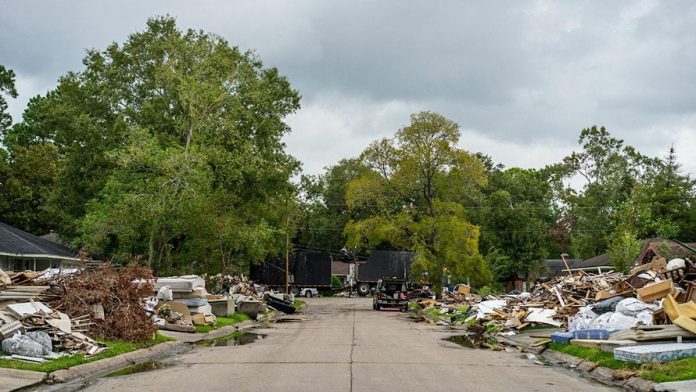


Debris along a residential neighborhood hit by Hurricane Harvey. – Cire notrevo // Shutterstock
FEMA cuts and home insurance rates: How a shrinking disaster response budget could hurt your budget
Funding cuts to federal programs, such as FEMA’s Building Resilient Infrastructure and Communities (BRIC) program and the National Flood Insurance Program (NFIP), reduce disaster preparedness and response across the U.S.
Budget cuts to these programs lead to slower disaster response, fewer mitigation efforts, and an increased risk of greater damage and larger home insurance claims. The result: Further rate increases in areas at high risk of natural disasters that already face high home insurance rates and limited coverage options.
To mitigate risk, state and local programs offer grants and insurance discounts for home-hardening measures, such as installing hurricane-proof roofs. Not only can home improvements prevent property damage, but they can also lower insurance rates.
Insurance.com examines how recent federal funding cuts to FEMA programs could affect home insurance rates.
Quick coverage:
-
FEMA programs not only provide disaster relief but also improve infrastructure and reduce disaster risks, thereby reducing the impact of natural disasters.
-
Funding for the BRIC program has been halted, ending grants to help prepare for natural disasters such as floods and hurricanes.
-
Homeowners may turn to state and local programs for grants and insurance discounts based on home-hardening improvements, such as fire-resistant roofs.
What FEMA programs are being cut, and why could it affect home insurance?
FEMA programs, including the Building Resilient Infrastructure and Communities (BRIC) program and the National Flood Insurance Program (NFIP), have recently seen major cuts. As funding for risk-mitigation programs is reduced, insurers expect more costly claims, and homeowners could face historically high insurance rates.
-
The BRIC program provides grants to communities to help fund projects that reduce damage from natural disasters such as floods and tornadoes. These grants may fund up to 75% of project costs to build infrastructure that protects homes and businesses by mitigating weather-related damage.
-
The NFIP provides flood insurance through the federal government and is administered through insurance partners. The program offers homeowners and businesses flood coverage and restricts building in floodplains to reduce potential damage. Many mortgage companies require flood insurance in high-risk areas.
-
The NFIP operates at a substantial loss, and Congress has forgiven billions in debt in the past, although a large debt still exists and is growing. While the program offers lower-cost flood insurance to homeowners, there is a push to move flood insurance to local and private programs. However, insurance rates would increase significantly for those who need coverage.
Programs like BRIC and NFIP provide the resources necessary to build and replace infrastructure that protects homeowners from weather-related disasters, as well as fund emergency disaster response. Without these programs, property damage and injuries can increase significantly, and insurance rates may become unmanageable for some homeowners.
Not only do the new federal policies eliminate future grant opportunities, but they also cut off current funding. So, if a project has already begun, the awarded grants are removed, leaving many communities in the middle of infrastructure upgrades or replacements with no way to finish.
The risks of reduced funding as climate change fuels disasters
As funding for risk-mitigation programs is reduced, insurers expect more costly claims, and homeowners face higher-than-ever insurance rates or forgo coverage. Many areas of the U.S. have experienced a record number of natural disasters, no longer confined to certain seasons or small-scale events.
Budget cuts to the National Oceanic and Atmospheric Administration (NOAA) affect how insurers determine rates. Data from NOAA enables insurers to predict and assess risk, which in turn shapes home insurance rates. Funding cuts to NOAA mean less information for insurers to use, leading them to base rates on worst-case scenarios.
Another drawback of reduced FEMA funding is a lack of staffing. As more employees are laid off, certain disaster assistance programs may be reduced or eliminated. For example, with fewer people, early warnings may lag, and responses after a disaster may be slower.
Early warning systems can save lives, not just insurance dollars
On July 4, 2025, heavy rain caused a flash flood of the Guadalupe River in Texas, resulting in massive damage and the loss of more than 110 lives. The National Weather Service issued multiple warnings, but they didn’t reach the people who needed to hear them.
The area relied on outdated warning systems and had repeatedly declined to spend the $1 million required to install an advanced flood alert system that would have included sirens and upstream water gauges. The cost of damage from that flood was estimated to be as high as $22 billion.
While an early warning system might not have reduced property damage, it would have reduced the loss of life. Additional efforts to strengthen homes and camps along the river may have reduced both. The tragic event is a clear example of the importance of disaster preparation.
How well-funded disaster response programs can help keep home insurance affordable
Disaster response doesn’t just mean after the emergency. Many FEMA-funded programs help state governments and local communities prepare for disasters before they strike, keeping insurance costs low.
-
Programs like BRIC help fund infrastructure upgrades and replacements that mitigate damage, such as retrofitting buildings to meet current building codes.
-
Programs that mitigate property damages and injuries help keep insurance costs down. As insurers see that claims are less likely and payouts are lower, insurance rates stay steady rather than increasing to cover costly claims.
-
When FEMA programs are reduced or dismantled, insurers have to cover the costs of disasters. Individuals and their insurers are left paying for expensive repairs after a disaster, causing home insurance rates to skyrocket.
Will the FEMA cuts affect flood insurance?
FEMA budget cuts significantly impact the NFIP, which is run by the federal government but partners with specific insurers to provide flood insurance to homeowners and regulates buildings in flood zones.
The program keeps flood insurance costs low for homeowners, which is important since standard home insurance policies don’t cover flooding, and most mortgage lenders require coverage if your home is in a high-risk area.
The NFIP incurs major losses each year, but it has 4.7 million policyholders, making it challenging to move flood coverage to individual insurers. Additionally, the NFIP performs proactive tasks, such as creating flood maps and helping manage floodplains, that individual insurers would not.
Without an affordable FEMA-backed option, homeowners needing flood insurance would have to turn to private insurance, which may be unaffordable in high-risk areas.
High insurance rates, reduced coverage options: How high-risk areas have already been impacted
Insurance rates have risen significantly in recent years, especially in high-risk areas, where major natural disasters have created a crisis.
Insurers use models, such as NOAA data, to assess the risk of insuring an area. Predicted natural disasters, material and labor costs, and infrastructure contribute to insurance rates, and homeowners may see very different insurance rates depending on where they live.
In addition to higher home insurance rates, homeowners in some areas have seen insurers pull out of their market or significantly reduce coverage. Insurers in high-risk states such as California have either stopped offering home insurance entirely or reduced the number of new policies written, leading to higher premiums for homeowners who can find coverage.
Homeowners in high-risk states may have to turn to state-run insurance plans due to limited private insurance options. For example, the FAIR plan in California provides basic fire insurance for homeowners, with insurer options limited.
However, although the FAIR plan provides much-needed fire insurance, its coverage is limited and can be more expensive than that of a private insurer.
What can homeowners do to mitigate disaster risk amid federal funding cuts?
Homeowners can’t control funding cuts, but they can mitigate disaster risk on an individual level to keep insurance costs lower. Many states offer programs that help homeowners prepare their homes for natural disasters, which, in turn, keep insurance rates down. Examples include:
-
The South Carolina Safe Home Program offers grants to homeowners to strengthen their homes against hurricanes by installing stronger roofs or other safety features.
-
Florida has the My Safe Florida Home program, offering grants for wind mitigation and free inspections, and requires home insurance discounts for wind mitigation efforts.
-
The OKReady program in Oklahoma offers homeowners wind and hail mitigation grants.
Contact your state insurance department to learn which programs and discounts you may qualify for, and how to mitigate disaster-related damage specific to your area. Taking advantage of these programs can significantly lower insurance rates and help prevent damage to your home.
Will FEMA cuts increase home insurance rates?
FEMA cuts will likely add to already increasing home insurance rates. However, the full extent will depend on the upcoming hurricane and fire seasons. In an active hurricane or wildfire season, the halt of federally funded mitigation programs will result in increased damage, which, in turn, will cause insurance companies to request rate increases to cover the cost of paying claims.
Furthermore, as the risk of major natural disasters without warning or preparation increases, home insurance companies will translate that risk into higher premiums.
Using state resources to help mitigate risk and make your home more insurable will help, but in the long-term, FEMA cuts are likely to have a widespread impact on the insurance industry.
FAQ: FEMA cuts and home insurance
Do home insurance rates go up after a natural disaster?
Yes, a natural disaster can raise home insurance rates, but it doesn’t happen immediately. When insurance companies pay out large claims after a disaster, they may seek to recoup those losses by raising rates. However, to do that, insurers must file for a rate increase with the state insurance regulator, who may approve or deny it. If approved, the rate increase will go into effect at policy renewal. As a result, homeowners may not see the increase for a year or more after the event.
How does FEMA back the National Flood Insurance Program?
FEMA acts as the guarantor of the NFIP, ensuring that flood claims are paid even if they exceed the premiums paid into the program. Through FEMA, the NFIP has the authority to borrow from the U.S. Treasury to cover the cost of flood insurance claims when necessary.
This story was produced by Insurance.com and reviewed and distributed by Stacker.

Alice J. Roden started working for Trending Insurance News at the end of 2021. Alice grew up in Salt Lake City, UT. A writer with a vast insurance industry background Alice has help with several of the biggest insurance companies. Before joining Trending Insurance News, Alice briefly worked as a freelance journalist for several radio stations. She covers home, renters and other property insurance stories.