


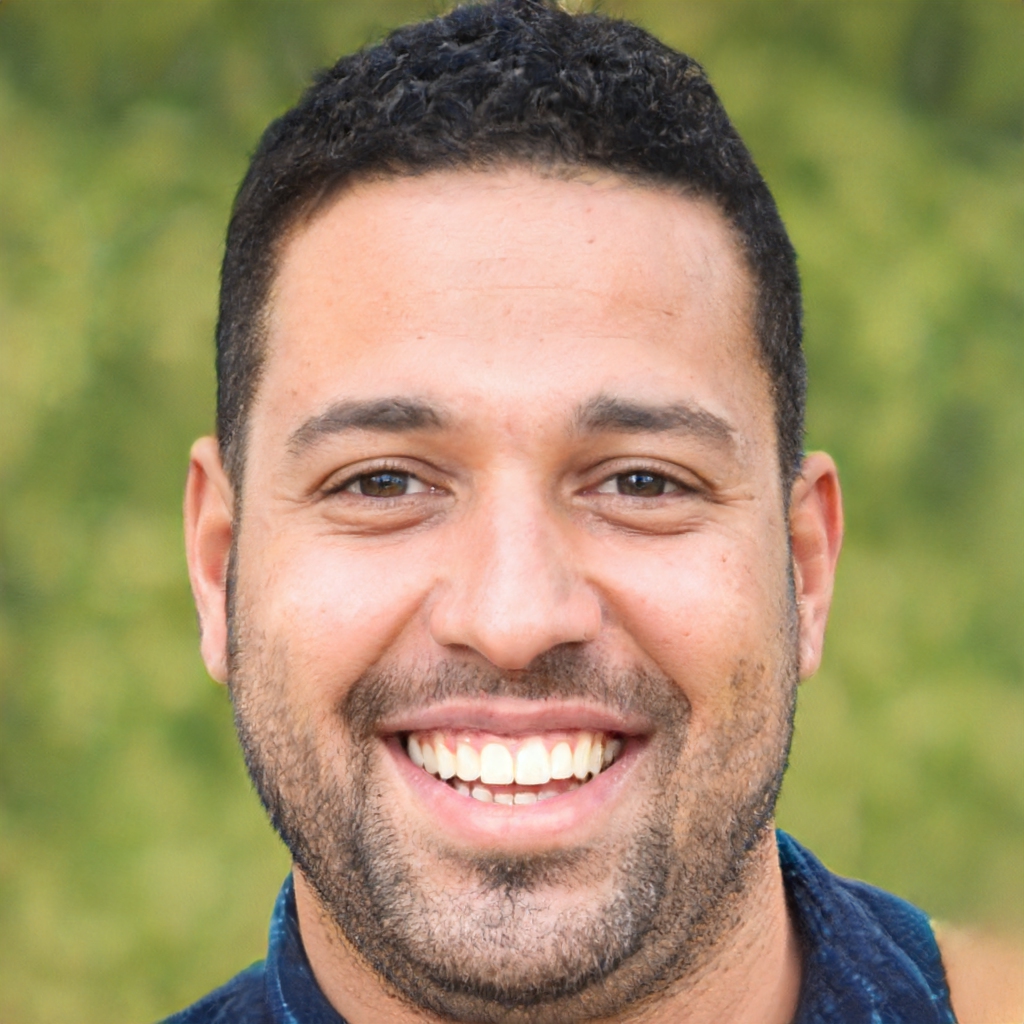

As a child growing up in Iran, Mojgan Lefebvre dreamed of becoming a doctor. But turbulent times in the Middle East nation led her to immigrate to the United States, where she took a pragmatic approach to planning for her future. The cost to study medicine felt too prohibitive, especially given that Lefebvre would fund her own education.
“Having a strong math background, everybody told me I should go into computers,” says Lefebvre. “I had never seen a computer before in my life, but I decided to take the advice.”
Lefebvre was a quick study at Georgia Tech, where she earned her degree in computer science. She began her career as a software engineer at BellSouth, now part of telecommunications giant AT&T, served as a consultant at Bain & Company, and took on technology leadership roles with increasing levels of responsibility. She served as chief information officer at three different companies before becoming the chief technology and operations officer at Travelers Companies, the No. 99-ranked Fortune 500 insurer, in 2018.
“I would say in today’s world, the CTO and CIO titles have become interchangeable,” says Lefebvre. “I’m in charge of everything technology at Travelers, everything internal and external.”
Most recently, her efforts have focused on strategically mapping out and deploying the insurance giant’s artificial intelligence strategy. Some of this work predates Lefebvre’s time at Travelers, as the company had embedded machine learning and AI into its business for well over a decade. In 2020, Lefebvre created an AI-focused accelerator team, an enterprise-wide center of expertise that centralizes efforts on the technology.
After ChatGPT’s debut in November 2022, Travelers wanted to quickly put AI in the hands of its 30,000-plus employees. It launched TravAI, an in-house agentic AI platform intended to boost employee productivity, that integrates multiple generative AI tools with internal systems. Every employee can access TravAI after completing a training program.
“It’s taken away that fear that AI is here to take away my job,” says Lefebvre.
But Lefebvre says she doesn’t want to rack up numerous, disparate AI use cases. The so-called “let a thousand flowers bloom” theory to allow dozens or even hundreds of AI pilots proliferate across the enterprise has fallen out of favor. As technology leaders hunt for a more clear return on investment, which has proven to be elusive for many, they’ve gotten far more focused.
CTOs and CIOs are focusing on fewer bets that have a greater ability to scale. At Travelers, that means spending more on AI tools that can improve claims, service management, and bolster the company’s data and analytics capabilities. “I don’t think a thousand little things will add up,” says Lefebvre.
Already in 2026, Lefebvre has launched two new AI tools focused on those priorities. In January, Travelers and Anthropic announced that nearly 10,000 of the insurer’s engineers, data scientists, analysts, and product owners would get access to Anthropic’s personalized AI assistants to speed up software, analytics, and ML model development.
One month later, Travelers debuted its AI Claim Assistant, an agentic AI tool developed with OpenAI that can answer customer claim submission questions in a “natural, friendly” tone similar to what they would expect from a human agent.
When Travelers handles the first notice of loss, which is the initial report a policyholder makes to an insurance company regarding an accident or other incident that may result in compensation, around 50% have opted to go digital and record the claim in the Travelers app. When they do so, the default option is for them to talk to the AI Claim Assistant and so far, consumers are showing “tremendous acceptance” of these conversational AI capabilities.
So far, Lefebvre’s top external partners on generative AI have been Anthropic and OpenAI. “It’s too early in the AI journey to do everything with one, so from the very beginning, we wanted to partner with the leaders in the area,” she says. “There are certainly other players, but you also don’t want to have ten different partners.”
With the conversational AI capabilities, Lefebvre felt that OpenAI was at the forefront, while Anthropic’s analytical, coding, and engineering capabilities are considered to be “absolutely ahead of others.”
Measurement of success varies across Lefebvre’s AI bets. For claims, as an example, Travelers wants to reduce the time it takes to close a claim. Financial-related targets include efficiency gains across engineering and cost avoidance for any workflows that can be automated by AI. A third metric that Travelers tracks is adoption and “empowerment,” with the latter linked to the change management that the company wants to see in terms of embracing a new way to approach work.
“Anything that you don’t measure can evaporate,” says Lefebvre. “You absolutely have to have some commitments in your budgets and your plans. And if you don’t do that, the benefits won’t necessarily be realized, whether it’s expense savings or growth.”
John Kell
Send thoughts or suggestions to CIO Intelligence here.
NEWS PACKETS
A big week for Meta. In its quest to catch up to OpenAI, Anthropic, and Google in the LLM race, Meta unveiled Musk Spark last week, the first AI model produced by its research unit Meta Superintelligence Labs. The Facebook and Instagram parent said that the model is competitive with the leading models from that trio, though it did not surpass them across the board, according to benchmark tests that Meta published. Separately, Meta announced a $21 billion commitment to cloud provider CoreWeave, with new spending set to run from 2027 to 2032, as Meta has also been building out its own AI infrastructure. The pair previously signed a $14.2 billion deal for computing power in September.
Amazon’s annual shareholder letter again focuses on AI. The Wall Street Journal notes that for three consecutive years, Amazon CEO Andy Jassy’s letter to investors has been a fresh opportunity to highlight the tech giant’s vision on AI. He acknowledges the debate over whether AI’s technology may be over-hyped, whether the industry is in a “bubble,” and if profit margins and the return on invested capital will be appealing. It won’t surprise anyone that his answers to those questions are: no, no, and yes. Amazon, after all, has committed $200 billion in capital expenditures in 2026 alone. Other notable technologies that got a shout out from Jassy include satellites, robotics, drone delivery, and rural connectivity.
OpenAI-Elon Musk court battle looms. As the AI startup and tech entrepreneur gear up to go to trial on April 27, OpenAI in a court filing on Friday objected to the changing objectives that were filed earlier in the week by Elon Musk’s legal team. Musk originally sued OpenAI and Microsoft in 2024 over claims related to the ChatGPT maker converting from a research nonprofit to a for-profit enterprise. But last week, Musk’s lawyers said that any money he wins at trial should go back to OpenAI instead of him and that he wants the court to unwind OpenAI’s conversion and force the ouster of CEO Sam Altman. OpenAI has said that these late proposals were “legally improper and factually unsupported.” The Financial Times, meanwhile, has recently reported that Musk has been losing cases in court.
All the swirl around Anthropic’s new AI model. Anthropic’s latest AI model Mythos is making quite the splash—more than most—as cybersecurity experts have warned that the new model’s ability to exploit software vulnerabilities could lead to more complex cyberattacks on legacy banking systems. Fortune reported on the risks from a variety of vantage points: the concentration of AI power that’s in the hands of a single company, how the U.S. government should think about policies to govern these new capabilities, and how other enterprises should react. The new model also comes as Anthropic is having what looks like, on paper, to be a pretty stellar year. The company has hit a $30 billion annual recurring revenue run rate and is reportedly planning to launch an initial public offering this year.
ADOPTION CURVE
Trust barriers are slowing AI adoption. Nearly six in ten companies acknowledge that they have stalled AI projects, with the biggest barriers preventing adoption including concerns about data privacy and security (34%), explainability (30%), model transparency (28%), and regulatory uncertainty (27%), according to a recent study of 2,000 leaders across the U.S. and U.K. commissioned by software company Gong.
Chris Peake, chief trust officer at Gong, tells Fortune that the study found very little variation in AI-related trust concerns across both regions. He advised that enterprises and AI vendors need to be more communicative at the beginning of a new project to set clear parameters about how data is used, how large language models work, and what security protocols are in place. Alleviating those concerns is especially critical in highly regulated industries like financial services and healthcare, Peake added.
“Rather than wait, just fuel the front end of exploration,” says Peake. “Let people dive in and use it.”
Some of the top assurances that leaders were looking for, according to the study, include explainability and the ability to articulate AI-derived outputs (26%), the ability to explain AI model guardrails protecting data (25%), built-in security guarantees (23%), and third-party audits or certification (23%).

Courtesy of Gong
JOBS RADAR
Hiring:
– Polsinelli is seeking a CIO, based in Kansas City. Posted salary range: $350K-$525K/year.
– National Life Group is seeking a CTO, based in Montpelier, Vermont. Posted salary range: $300K-$440K/year.
– SMX is seeking a SVP of technology strategy. Posted salary range: $246.1K-$393.8K/year.
– Goodr is seeking a VP of technology, based in Los Angeles. Posted salary range: $195K-$220K/year.
Hired:
– Autodesk appointed Mike Kelly as CIO, effective April 13, leading enterprise technology strategy, AI adoption, and the digital employee experience for the design software company. Most recently, Kelly served as operating partner and the first CIO at the venture capital firm Andreessen Horowitz. He also previously held CIO roles at Red Hat and McKesson.
– Pep Boys announced the appointment of Nik Umrani as CIO. Before joining the automotive services provider, he served as global CIO at NSM Insurance Group. Umrani has also held senior leadership roles at Comcast, ADT, and Verizon Communications.
– SailPoint appointed Levent Besik as chief product officer, where he will lead the security software company’s product organization and report to CTO Chandra Gnanasambandam. Most recently, Besik served as VP of product management for Microsoft’s identity division. He also held executive product leadership roles at Okta and Google.
– TAP Real Estate named Jeff Jarrard as CTO, where he will lead the buildout and development of the real estate company’s website, focused on homeowner reporting, property valuation, and cloud-based home management. Jarrard spent more than 12 years at Microsoft in senior roles across applied AI, data science, and product management. He also worked at Washington Mutual Bank.
– Wetour Robotics appointed Bin Lian as CTO, where he will oversee the engineering team and oversee development of the wearable robotics company’s core products. Until recently, Lian had been focused on his academic career and is a Ph.D. candidate in mechanical engineering at The University of Texas at Austin.
– AppLovin has announced CTO Basil Shikin will move into the role of distinguished engineer, effective July 1, and will be succeeded by Giovanni Ge, the company’s current chief product and engineering officer. Ge has held various senior engineering roles since joining AppLovin in November 2022.

Clinton Mora is a reporter for Trending Insurance News. He has previously worked for the Forbes. As a contributor to Trending Insurance News, Clinton covers emerging a wide range of property and casualty insurance related stories.